During their operations, manufacturing firms have to deal with hundreds or even thousands of contracts. Supplier contracts, procurement contracts, sales agreements with customers, maintenance contracts, service-level agreements (SLAs), vendor partnerships, and subcontractor documents are all essential to the day-to-day business operations.
A manual approach to these contracts can result in failure to meet the deadline, compliance problems, and delays in getting approvals, as well as unnecessary financial risks. That is why, modern manufacturers are investing into Contract Management Solutions which automatize the whole contract lifecycle and are tightly integrated with the ERP qatar systems.
Whether it is an expanding manufacturer or a large industrial organization, the introduction of digital contract management can have a significant effect on efficiency in operations, the relationship with suppliers, and lessening legal and financial risks.
What are Contract Management Solutions?
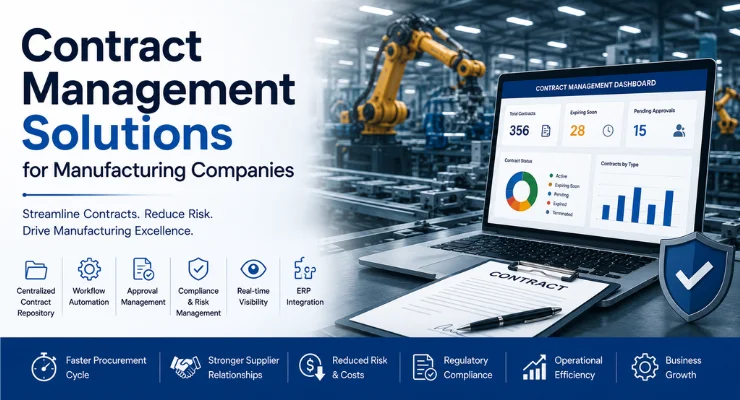
Contract Management Solutions are online systems that can assist companies in developing, storing, overseeing, accepting, renewing and managing contracts within their entire life cycle.
Businesses can then centralize all contracts in a secure system and automate workflows and approvals processes, instead of using spreadsheets, emails, or paper documents.
Contract management systems are used by manufacturing companies to deal with:
Supplier contracts
Procurement agreements
Customer contracts
Equipment maintenance contracts
Service contracts
Vendor agreements
Lease agreements
Compliance documents
Warranty contracts
Outsourcing agreements
Contract management is even more effective when combined with an ERP system as it links purchasing, finance, inventory, production, and compliance into a single platform.
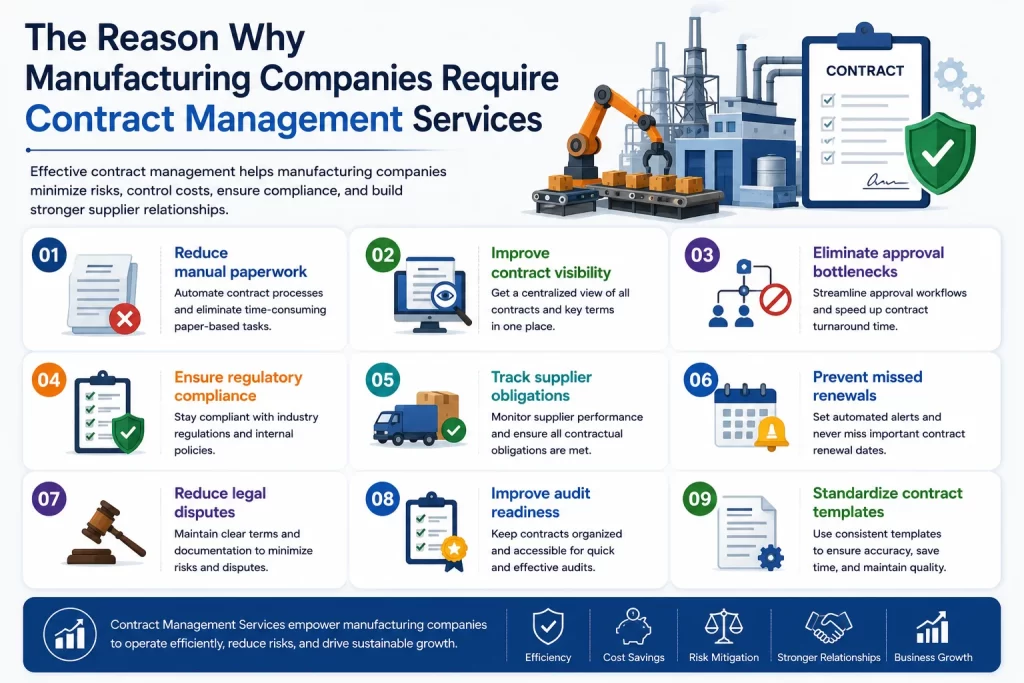
The Reason Why Manufacturing Companies require Contract Management Services:
Manufacturers work under strongly regulated environments and the accuracy of the contract directly influences the production schedule, cost of procurement, compliance with the law and profitability.
Employees can easily find contracts, use powerful search features and instead of going through emails or filing cabinets, contracts are immediately retrieved.
Typical Contractual Issues in the Manufacturing Industry:
A lot of manufacturers continue to use manual contracting processes, which pose a lot of operational difficulties.
These include:
Missed Contract Renewals:
Businesses can automatically be reminded not to renew costly agreements or lose good supplier contracts without automated reminders.
Version Control Issues:
Several departments tend to edit contracts at the same time and it is quite hard to figure out which version is the latest one.
Approval Delays:
Approvals that are paper-based make procurement, purchasing, and production slow.
Compliance Risks:
Manufacturers are bound by local regulations, quality standards, supplier requirements and customer requirements.
Limited Visibility:
Contracts may be stored in different departments and collaborating with them may be challenging.
Contemporary contract management software eradicates these problems with centralized electronic processes.
The main characteristics of the modern software of contract management are:
The manufacturing companies in the contemporary era demand a lot more than a digital storage of documents.
An all-inclusive solution must entail:
Centralized Contract Repository:
Keep all the contracts under one lock with role-based access controls.
Automated Approval Workflows:
Auto-forward contracts to procurement offices, finance offices, legal offices or executives to approve.
Digital Document Versioning:
Keep a record of all the revisions with full audit trails.
Smart Search:
Find contracts instantly using:
Supplier name
Customer
Purchase Order
Contract number
Project
Product
Department
Expiry date
Renewal Alerts:
Get notified automatically before:
Contract expiry
Renewal deadlines
Payment milestones
Compliance reviews
Electronic Signatures:
Quickly process approvals without printing.
Compliance Monitoring:
Automatically monitor regulatory requirements and internal policies.
Reporting Dashboards:
Track:
Active contracts
Expiring agreements
Pending approvals
Contract values
Vendor performance
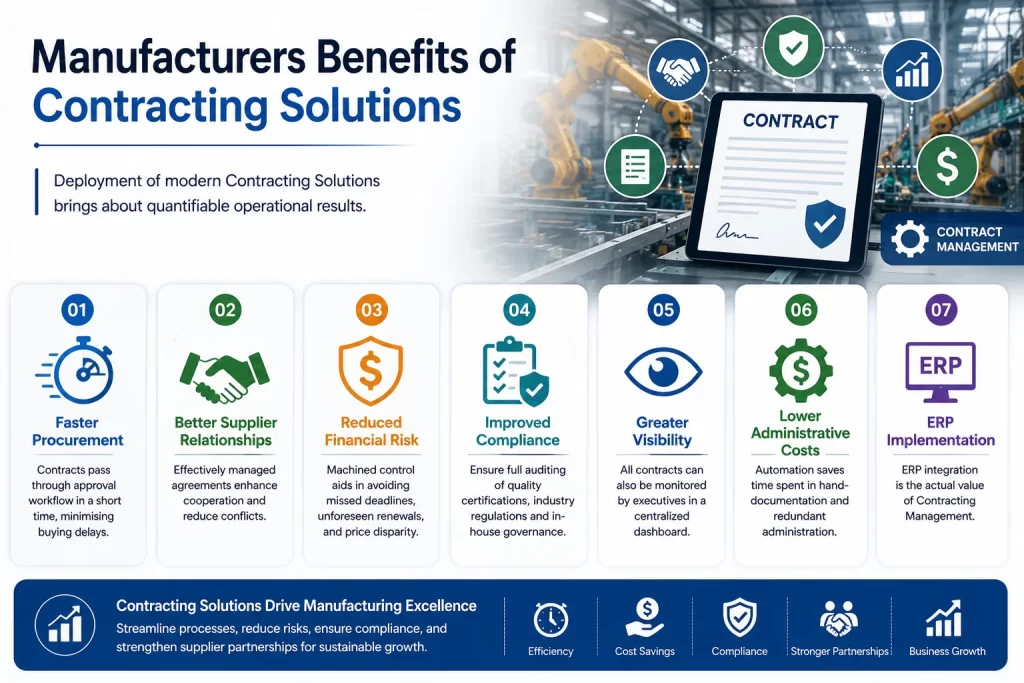
Manufacturers Benefits of Contracting Solutions:
Deployment of modern Contracting Solutions brings about quantifiable operational results.
Faster Procurement:
Contracts pass through approval workflow in a short time, minimising buying delays.
Better Supplier Relationships:
Effectively managed agreements enhance cooperation and reduce conflicts.
Reduced Financial Risk:
Machined control aids in avoiding missed deadlines, unforeseen renewals, and price disparity.
Improved Compliance:
Ensure full auditing of quality certifications, industry regulations and in-house governance.
Greater Visibility:
All contracts can also be monitored by executives in a centralized dashboard.
Lower Administrative Costs:
Automation saves time spent in hand-documentation and redundant administration.
ERP Implementation:
ERP integration is the actual value of Contracting Management.
Contract management that is linked to ERP is not done in isolation but connected to operational data through contracts.
Integrated workflows have the ability to interlink:
Procurement
Purchasing
Inventory
Finance
Manufacturing
Warehouse
Vendor Management
Project Management
CRM
Quality Management
In one instance, purchase orders may automatically be issued based on predefined contract terms when a purchase contract is approved thus saving manual effort and enhancing accuracy in procurement.
The way a Contract System contributes to the manufacturing processes:
A system of digital contracts forms the basis of operational governance.
It aids in different types of manufacturing such as:
Supplier Management:
Keep up full supplier contracts in terms of price and delivery, quality, and renewal.
Production Planning:
Get supplier commitments to enhance production.
Procurement:
Make sure that purchase orders match with negotiated contract prices.
Compliance Management:
Keep records of the audits and certifications necessary.
Asset Maintenance:
Service contracts and schedules of track equipment.
Customer Agreements:
Keep track of delivery requirements, payment conditions, warranties, and service contracts.
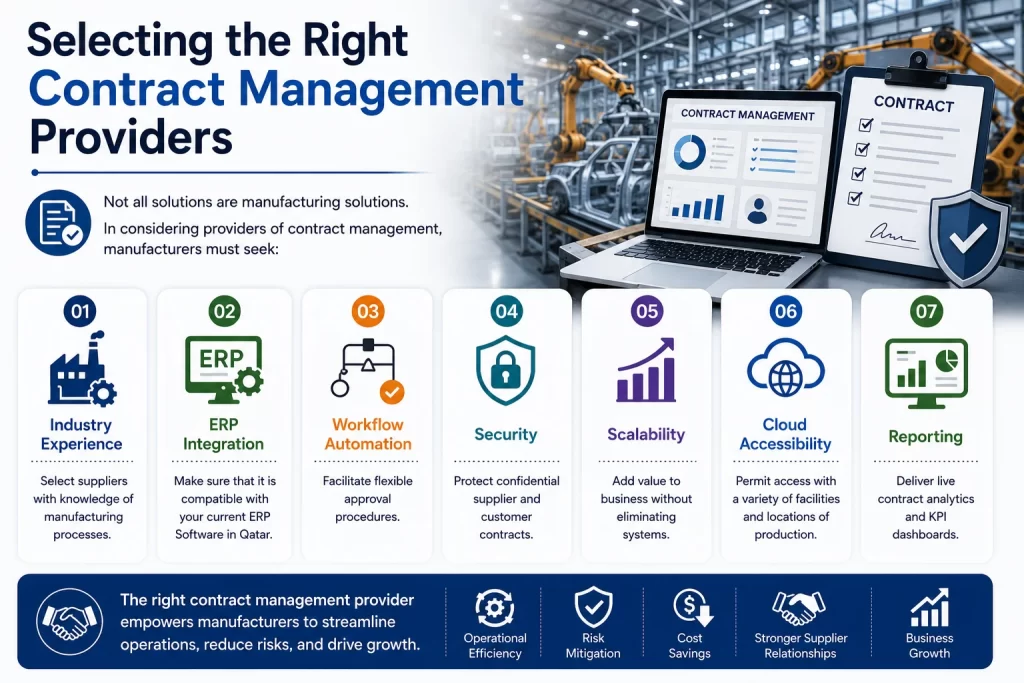
Selecting the Right Contract Management Providers:
Not all solutions are manufacturing solutions.
In considering providers of contract management, manufacturers must seek:
Industry Experience:
Select suppliers with knowledge of manufacturing processes.
Protect confidential supplier and customer contracts.
Scalability:
Add value to business without eliminating systems.
Cloud Accessibility:
Permit access with a variety of facilities and locations of production.
Reporting:
Deliver live contract analytics and KPI dashboards.
Contracting Management ERP:
Contract lifecycle management ERP systems integrate contract management data with operational data on the enterprise scale.
Benefits include:
Single source of truth
Automated procurement workflows
Financial visibility
Supplier performance monitoring
Reduced compliance risk
Improved production planning
Better inventory synchronization
Streamlined audits
Instead of having separate software applications, manufacturers operate contracts in their overall business ecosystem.
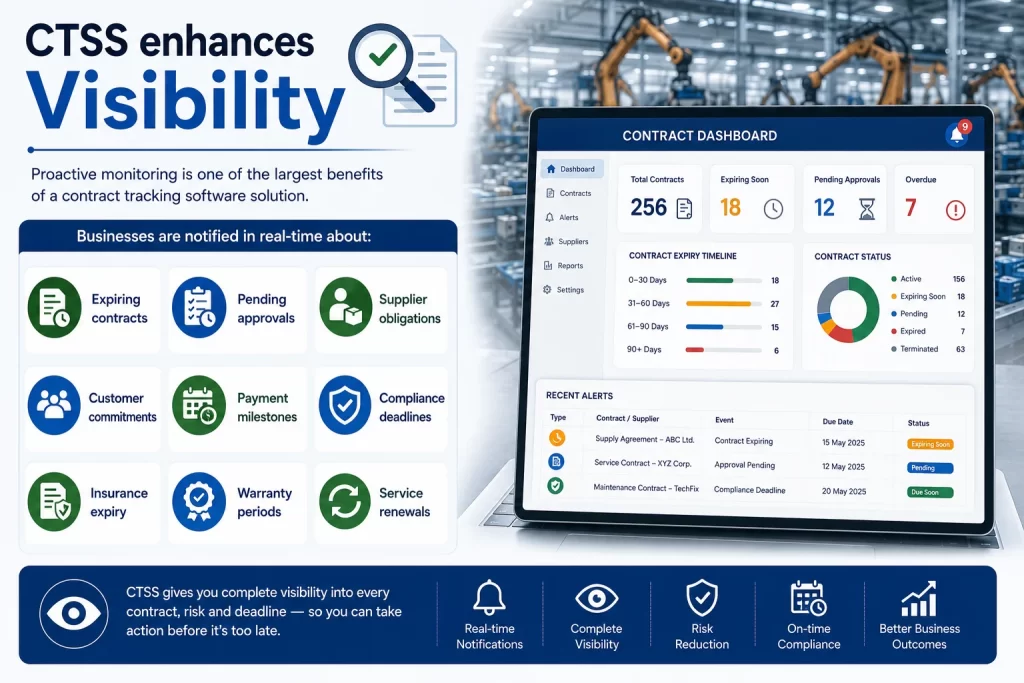
CTSS enhances Visibility:
Proactive monitoring is one of the largest benefits of a contract tracking software solution.
Businesses are notified in real-time about:
Expiring contracts
Pending approvals
Supplier obligations
Customer commitments
Payment milestones
Compliance deadlines
Insurance expiry
Warranty periods
Service renewals
Managers are always aware of the status of all the agreements.
Best Practices on the Successful Contract Management:
In order to achieve the most of the contract management manufacturers would have to consider these best practices:
Standardize the contract templates within the departments.
Automate approval processes to minimise delays.
Keep all the contracts in a central digital repository.
Automate renewal and compliance due dates.
Role-based user permission.
Combine contract management and ERP modules.
Periodically check supplier and customer contract.
Keep track of KPIs on real-time dashboards.
Periodically perform compliance audits.
Keep full version records of all contracts.
Such practices enhance transparency, accountability and efficiency in operations throughout the organization.
The importance of ERP Integration lies in:
ERP systems are already used by manufacturing businesses to handle procurement, finance, inventory, production and customer operations. The combination of contract management and erp software company eradicates the occurrence of multiple data entry systems and also makes sure that the terms of the contracts are reflected in all business processes.
For example:
Purchase orders: Approved supplier pricing is automatically used on purchase orders.
Finance departments are able to check invoices with contractual terms.
Alerts are sent to the procurement departments to warn them when the supplier agreements expire.
Inventory planning is in line with the delivery schedules of the contract.
Production teams do not experience interruptions as a result of lapsed supplier contracts.
A unified strategy develops a more integrated, efficient, and compliant manufacturing environment.
Conclusion:
With the increased complexity in manufacturing operations, it is no longer possible to maintain manual contract management. Modern Contract Management Solutions offer the manufacturers the means to automate workflows, enhance compliance, minimize risks of operation and reinforce supplier relationships.
Integrating digital contract lifecycle management with ERP software Qatar integration will allow manufacturers to have a full picture of all agreements and simplify the procurement, finance, production, and compliance processes.
Those companies that invest in smart contract management, not only can lessen the administrative load but also enhance operational efficiencies, lessen risks in legal matters and build a better basis of business expansion in the long term.
Contract Management Solutions Software platforms that facilitate the automation of contract creation, approval, storage, tracking, renewal and management of business contracts throughout their life cycle.
Manufacturers deal with a large number of supplier, customer, procurement and service contracts. Contract management software assists in minimizing manual effort, enhancing compliance, automating approvals, and minimizing financial risks.
ERP integration links contracts to procurement, finance, inventory, production and vendor management modules, and contract terms are implemented in business operations.
It has key attributes such as centralized contract storage, automated workflows, version control, renewal reminders, reporting dashboards, ERP integration, electronic signatures, and role-based access controls.
Contract tracking software offers real time access to the status of the contract, renewals, approvals, compliance and supplier obligations as well as the commitments of the customer, enabling manufacturers to avoid expensive delays and compliance problems.
As Regional Sales Team Lead, Saud Jamali focuses on accelerating regional growth through data-driven sales strategies, team leadership, and long-term client partnerships.